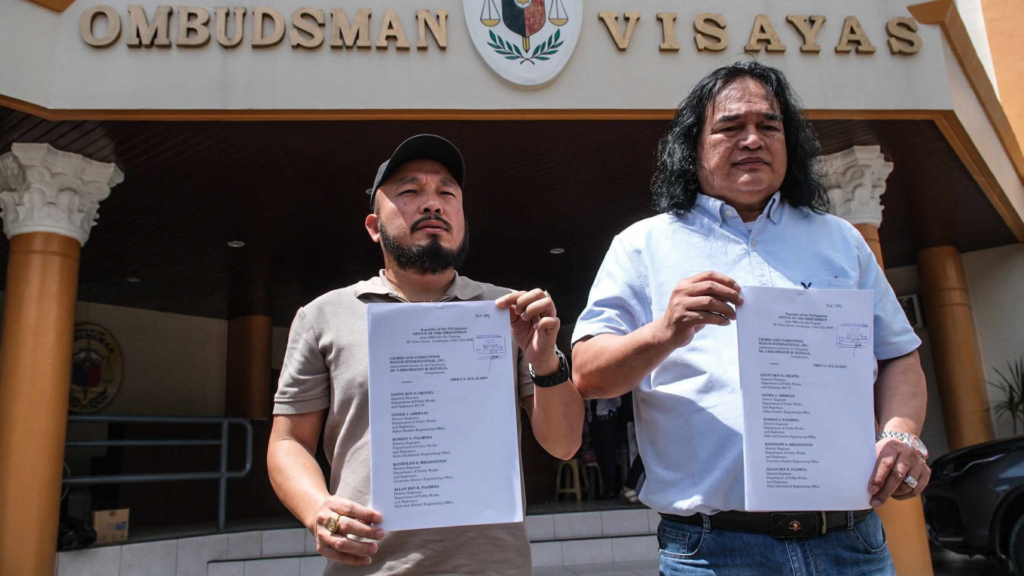
The Crimes and Corruption Watch International, Inc. (CCWI) has filed a graft complaint before the Office of the Ombudsman–Visayas against several officials of the Department of Public Works and Highways (DPWH) in Regions 6 and 7, alleging large-scale irregularities involving so-called “ghost projects” and anomalous flood-control contracts amounting to billions of pesos.
Named in the complaint were DPWH-6 Regional Director Sonny Boy Oropel; Aklan District Engineer Gener J. Abergas; Iloilo 3rd District Engineering Office (DEO) Engineer Robert S. Palmera; Guimaras DEO Engineer Randolph A. Melosantos; Iloilo 2nd DEO Engineer Allan Rey Pajimna; DPWH-7 Regional Director Danilo J. Villa Jr.; Finance Division Accountant IV Joan A. Cano; and several still-unidentified members of the Region 7 Bids and Awards Committee (BAC).
In its complaint, CCWI accused the officials of violating the Government Procurement Reform Act (Republic Act No. 9184), the Anti-Graft and Corrupt Practices Act (Republic Act No. 3019), and other related laws. The group alleged that flood-control and infrastructure contracts were repeatedly awarded to IBC International Builders Corp., despite the firm’s history of delayed implementation, substandard work, and alleged deficiencies in previously funded projects.
According to CCWI, several projects either showed minimal physical accomplishment, were allegedly non-existent on the ground, or failed to meet technical specifications, yet were reportedly paid for or certified as completed. The watchdog group further claimed that the repeated awarding of contracts to the same contractor raised serious questions about possible collusion, favoritism, and abuse of discretion by DPWH officials and BAC members.
“These alleged practices undermine public trust and deprive communities of much-needed flood-control infrastructure, particularly in areas vulnerable to flooding and climate-related disasters,” CCWI said in its filing. The group urged the Ombudsman to immediately place the respondents under preventive suspension and conduct a full investigation to determine criminal, civil, and administrative liabilities.
Flood-control projects have long been identified as high-risk for corruption due to their large budgets and technical complexity. CCWI emphasized that the alleged anomalies not only involved misuse of public funds but also posed risks to public safety, as unfinished or poorly constructed flood-control structures could worsen flooding during heavy rains.
As of this writing, the DPWH officials named in the complaint have yet to issue a formal statement responding to the allegations. The Office of the Ombudsman–Visayas has also not released details on whether a preliminary investigation has been initiated.
The case adds to mounting scrutiny over infrastructure spending and procurement practices in government agencies, as anti-corruption groups continue to push for greater transparency and accountability in the use of public funds.