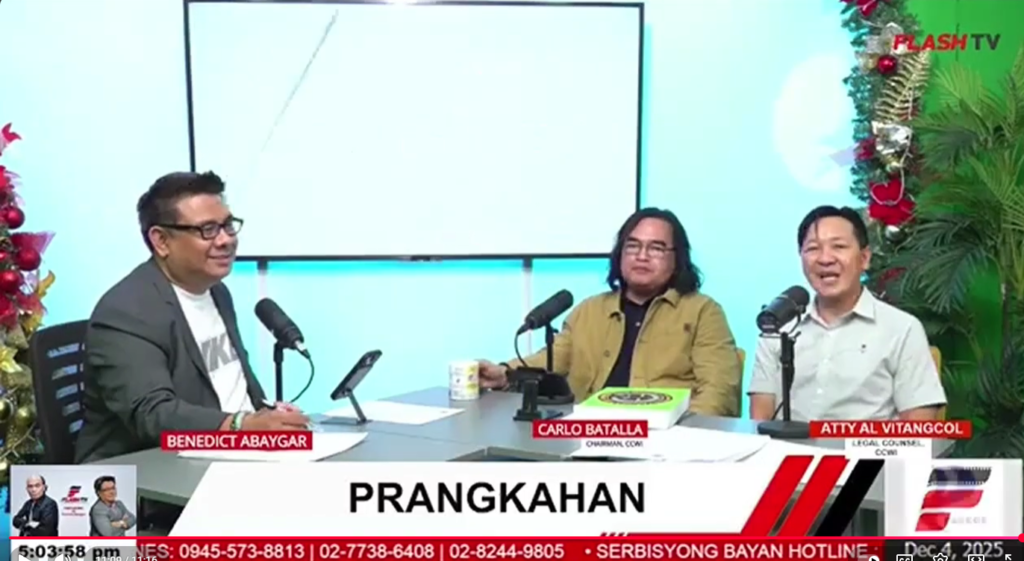

In a startling televised exposé, Carlo Batalla, chairman of the anti-corruption watchdog Crime and Corruption Watch International (CCWI), alleged the existence of widespread and deeply entrenched corruption within the Philippine Department of Public Works and Highways (DPWH). The claims, which Batalla emphasized are supported by publicly accessible government records, point to a pattern of ghost projects, favored contractors, and years of alleged inaction by oversight institutions.
Attempt to Blacklist Major Contractors
Batalla disclosed that as early as 2022, CCWI formally filed complaints before the Presidential Anti-Corruption Commission (PACC) and the Office of the Ombudsman, seeking the investigation and blacklisting of 43 major infrastructure contractors. According to Batalla, these firms were repeatedly awarded government contracts despite evidence of non-performing or severely delayed projects.
He described these contractors as “big-time players” who allegedly continue to win new bids even while existing projects remain unfinished or stalled.
Alleged “Ghost Projects” and Manipulated Digital Records
Central to CCWI’s allegations is the Project Contract Management Application (PCMA)—a DPWH-mandated digital system designed to provide real-time monitoring of project implementation. Batalla and CCWI Deputy Executive Director Mills Espina, a Certified Public Procurement Specialist, alleged that PCMA records are being systematically falsified.
According to Batalla, numerous projects listed in the PCMA as “100% complete” do not exist on the ground. “If you go to the site, it’s not there,” he said, characterizing the system as a digital façade that conceals non-existent or unfinished infrastructure.
Espina added that such falsifications undermine transparency mechanisms that were originally intended to prevent corruption.
Oversight Bodies Under Scrutiny
Batalla expressed frustration over what he described as years of institutional inaction. He noted that many of the complaints CCWI filed between 2022 and 2023 were dismissed by the Ombudsman, allowing the alleged irregularities to persist.
However, he pointed to what he described as a recent shift in responsiveness. In connection with a newly emerging “flood control scam”, Batalla said the Ombudsman responded within two weeks—an unusually fast turnaround compared to earlier cases. He suggested this may reflect mounting public pressure and growing scrutiny of public works spending.
Alleged Violations of Procurement Law
Espina outlined what CCWI claims are clear violations of procurement regulations, particularly Presidential Decree 1870, which bars contractors with a negative slippage of 15% or more from being awarded new government projects.
Despite this rule, CCWI’s review of bidding records allegedly shows contractors with multiple delayed projects continuing to secure fresh contracts. Espina emphasized that CCWI’s findings are grounded in professional expertise, noting that their team includes personnel formally trained under Government Procurement Policy Board (GPPB) curricula.
“This is not speculation,” she said, stressing that CCWI members are certified to identify procurement breaches based on established standards.
A Systemic, Not Isolated, Problem
The watchdog group argued that the alleged corruption is not confined to DPWH alone. According to Batalla and Espina, DPWH’s procurement framework serves as a model for other government agencies, meaning any systemic weaknesses are likely being replicated across the bureaucracy.
Notably, CCWI stated that all evidence used in its cases comes from publicly available sources—including DPWH websites, procurement portals, and even live-streamed bid openings on YouTube. The challenge, they said, lies not in access to information but in the lack of public awareness and technical capacity to synthesize these materials into actionable cases.
Call for Greater Civil Society Involvement
CCWI legal counsel Atty. Al Vitangcol and Espina both emphasized that long-term reform requires expanding independent oversight beyond government institutions. With fewer than 100 certified procurement specialists currently involved in their monitoring network nationwide, CCWI called for a significant increase in trained Civil Society Organizations (CSOs) capable of scrutinizing public bidding processes.
“We need civil society organizations to help monitor how public funds are spent,” Espina said. “Otherwise, we simply can’t do it alone.”
Public Impact and Broader Discontent
The interview linked these allegations to widespread public dissatisfaction with infrastructure quality, citing Metro Manila’s EDSA highway as a recurring symbol of stalled development. Batalla argued that funds allegedly lost to corruption could have financed multiple modern highways or long-term flood control solutions.
A Picture of Entrenched Corruption—And a Proposed Remedy
While CCWI acknowledged what it described as growing fear among corrupt officials and increased scrutiny from authorities, it maintained that enforcement alone is insufficient. The group’s primary recommendation is structural: the mass training and mobilization of independent watchdogs to provide continuous, technical monitoring of public procurement.
The allegations, if substantiated, raise serious questions about transparency, accountability, and the effectiveness of existing safeguards in Philippine public works. As of now, the claims remain allegations, with CCWI urging authorities and the public to examine the same records they say reveal a troubling pattern hidden in plain sight.