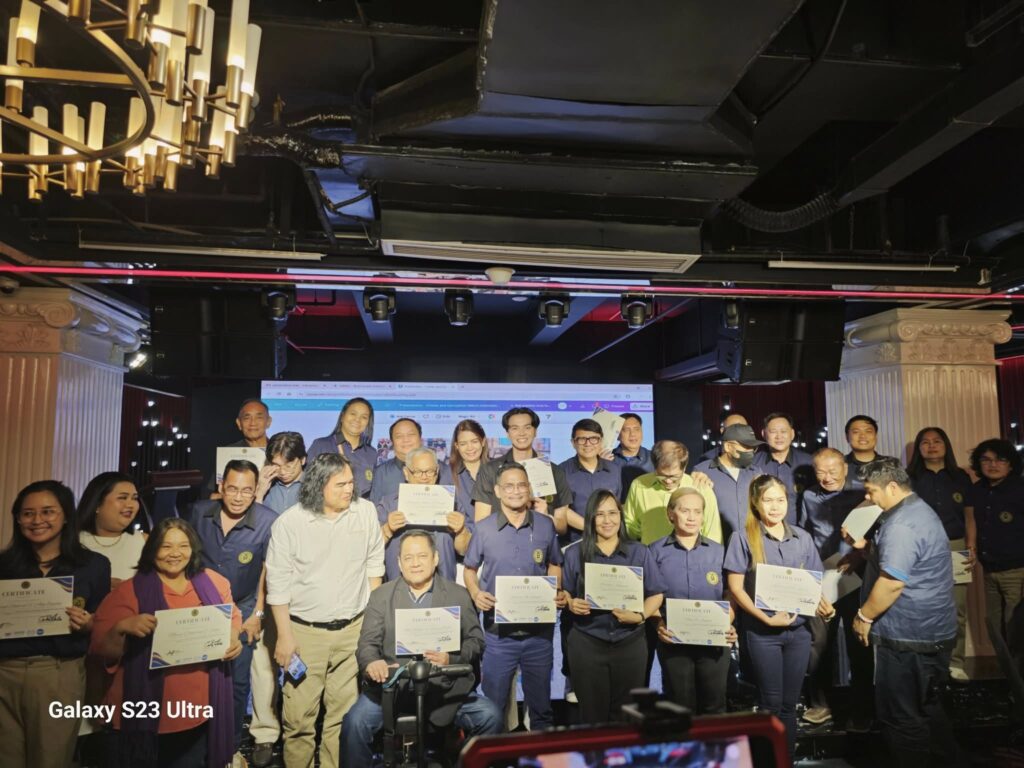
The Crimes and Corruption Watch International (CCWI) capped off 2025 with a clear message: fighting corruption now demands both compassion on the ground and sophistication in oversight.
During its Annual Lecture and Year-End Party held on December 27, 2025, CCWI leaders highlighted the organization’s expanding dual role—delivering large-scale humanitarian assistance while strengthening its capacity to monitor government procurement through legal expertise and artificial intelligence.
Humanitarian Reach Across Disaster-Stricken Communities
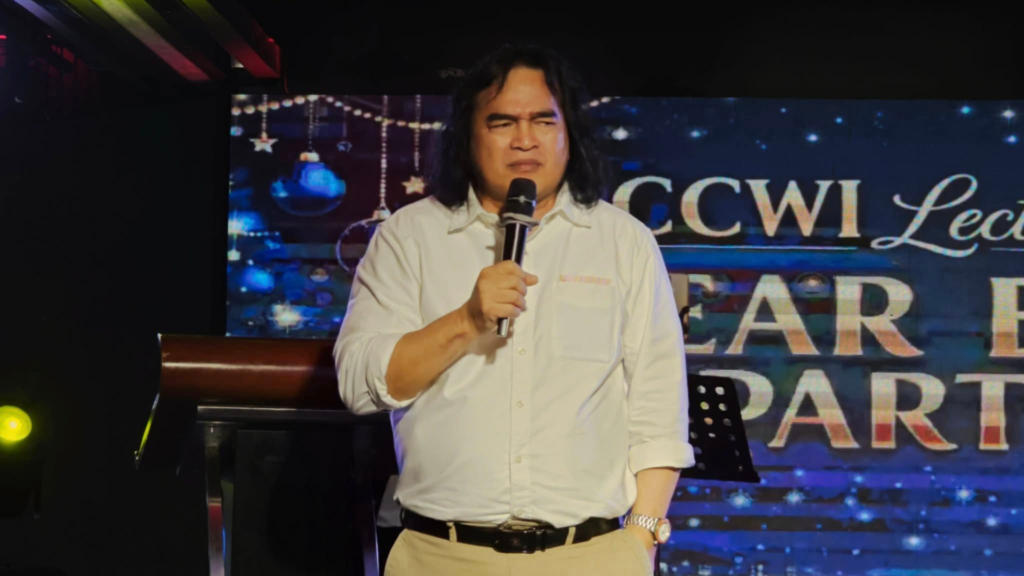
In his keynote address, CCWI Chairman Carlo Magno Batalla underscored the organization’s tangible impact on vulnerable communities, announcing that the group had extended assistance to around 5,000 families affected by typhoons and flooding in Cebu, Davao, Catanduanes, and Masbate over the last quarter of the year.
Batalla further disclosed that CCWI’s total charitable output in 2025 reached an estimated ₱50 million or more, including the nationwide distribution of 10,000 to 20,000 wheelchairs to persons with disabilities (PWDs).
“We are the only ones who truly have pure love and help in the PWD sector,” Batalla said, emphasizing that the organization’s advocacy for persons with disabilities remains a non-political, humanitarian mission at the heart of CCWI’s work.
From Passive Observation to Active Accountability
Beyond celebration, the gathering placed heavy emphasis on sharpening CCWI’s watchdog role. The centerpiece of the program was an in-depth lecture on the new Procurement Law (12-009), aimed at equipping CCWI’s observer corps with the knowledge and confidence to intervene when irregularities arise.
CCWI Executive Director Margaretta Batalla Fernandez stressed that observers must evolve from silent attendees into active participants—especially in procurement meetings involving flood control and infrastructure projects, which are often vulnerable to corruption.
“You need to have a voice, you need to speak up, and you need to document what’s happening,” Fernandez told members, underscoring the importance of detailed reporting and real-time accountability.
Embracing AI in the Fight Against Corruption
Adding a forward-looking dimension to the discussion, Millicent Shatrin V. Ang Espina, CCWI Deputy Executive Director and Procurement Specialist, demonstrated how free artificial intelligence tools, particularly Google’s Notebook LM, can significantly enhance monitoring efficiency.
Espina argued that AI-assisted analysis can help CCWI produce faster, more accurate, and more consistent procurement reports, reducing human error and allowing observers to focus on substantive red flags rather than manual data processing.
“If you will do all of this manually, it will be slow, it will be filled with errors. With free AI applications, we should utilize it,” Espina explained.
Her presentation also revisited CCWI’s 2025 institutional milestones, including high-level engagements with the Philippine Competition Commission (PCC) and participation in the Department of Education (DepEd) Supplier Summit—developments that further positioned CCWI as a credible civil society partner in governance reform.
Strengthening an “Organic” Watchdog Community
CCWI leaders also highlighted the organization’s unique composition, noting that it is the only NGO whose members are all certified public procurement specialists. This technical expertise, combined with grassroots humanitarian action, has fueled what Batalla described as an “organic” and deeply committed community.
In a spirited closing, the chairman described the gathering as “our happiest Christmas party”, attributing the energy in the room to the fact that the event was attended solely by active, dedicated members.
Looking Ahead to 2026
The year-end event served not only as a celebration of CCWI’s humanitarian and advocacy achievements, but also as a strategic launchpad for 2026—one that signals a more technologically empowered, legally grounded approach to fighting corruption.
As CCWI moves forward, the organization aims to prove that effective governance watchdogs must combine heart, expertise, and innovation to make transparency truly work for the public.