Group Wants 13 DPWH 6 Officials, Contractor Indicated for 'Ghost Projects'

September 18, 2025| By Sunstar
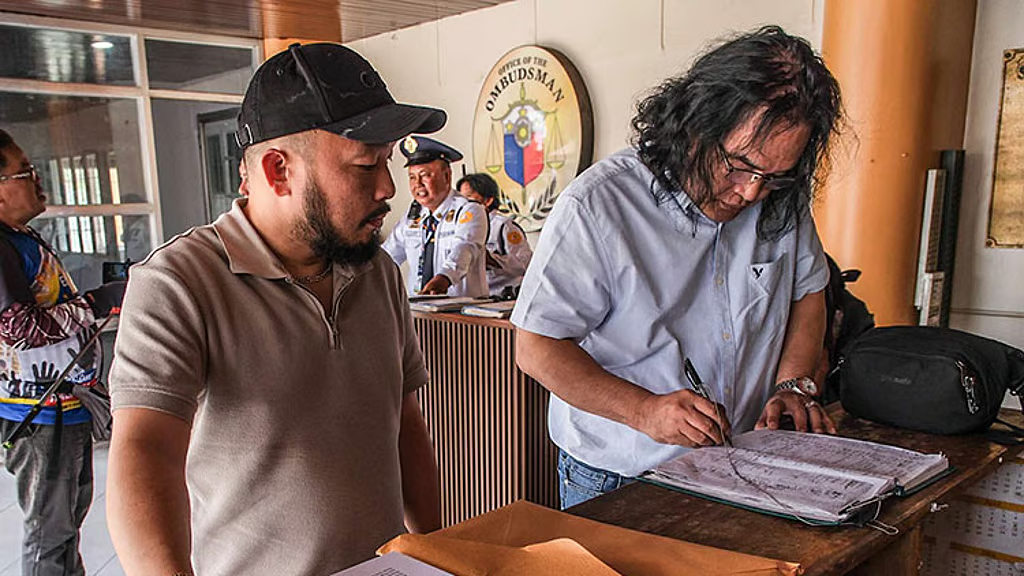
A CORRUPTION watchdog has filed two complaints before the Office of the Ombudsman against officials of the Department of Public Works and Highways (DPWH) in Central Visayas and Western Visayas.
The group, Crimes and Corruption Watch International Inc. (CCWI), led by Dr. Carlomagno Batalla, claims that regional officials ignored rules requiring poor-performing contractors to be penalized or blacklisted.
Instead, the officials allegedly awarded them new projects, putting taxpayer money and the government’s flagship infrastructure program at risk.
The big question
Why are the officials from DPWH’s regional offices are facing corruption complaints over its handling of contractors, and what does it mean for public projects?
Case against DPWH 7
The first complaint, filed Sept. 3, 2025, involves the DPWH’s Central Visayas office.
Officials accused: Director Danilo Villa, Accountant IV Joan Cano, and unnamed members of the Bids and Awards Committee (BAC).
Allegations: CCWI said these officials awarded 2025 contracts to companies with unresolved delays from 2024. In its complaint, it argued that these contractors should have been penalized, not rewarded with new projects.
Named contractors: QM Builders, Ganzalado Enterprises, ZLREJ Trading and Construction Corp., Quirante Construction Corp., Cebu 7th TechnoChem Industries Inc., and WTG Construction & Development Corp.
The watchdog argued that by allowing firms with records of unfinished or delayed work to handle new projects, officials risk repeating the same problems: missed deadlines, added costs, and substandard quality in projects such as road widening, drainage improvements, and bridge repairs.
Case against DPWH 6
The second complaint targets DPWH Western Visayas officials and International Builders Corp. (IBC).
“Suspicious” projects: CCWI questioned the rehabilitation of Iloilo flood control project’s Section 2 and Section 3, each worth P41.65 million. Both were reported as completed just five days apart in August 2023 — an unusually fast turnaround for large-scale flood control work.
Contractor history: IBC had more than 20 recorded delays or slippages. Under procurement rules, such a record should have been grounds for suspension or blacklisting. Instead, IBC allegedly kept receiving contracts.
Admission of lapses: In their counter-affidavits, DPWH 6 officials admitted they did not suspend or blacklist IBC, a move that CCWI said amounts to gross negligence.
CCWI further asked the Ombudsman to use its subpoena powers to review DPWH’s Project and Contract Monitoring Application (PCMA), which contains official records of project performance and could confirm whether the contractors’ reported completions were accurate.
The complaint was already filed before the Ombudsman Central Office in Manila on May 21. At that time, the flood control issue had not yet surfaced; it only came out in August. According to Batalla, the case was later referred to the Ombudsman Visayas. Since their group was required to submit a verified position paper, they filed it in Cebu on Sept. 18.
Laws involved
CCWI claimed that the officials’ actions violated multiple laws:
Government Procurement Reform Act (Republic Act 9184): Requires agencies to check contractors’ past performance and bars them from awarding new contracts to underperformers.
Anti-Graft and Corrupt Practices Act (RA 3019): Prohibits giving undue advantage to private parties at the expense of government funds.
Code of Conduct and Ethical Standards for Public Officials (RA 6713): Demands accountability and integrity from government employees.
The watchdog said that these are not minor technicalities. Allowing repeat offenders into the bidding process, it argued, undermines fairness and exposes taxpayers to financial loss.
Driving the watchdog’s cases
Impact on infrastructure projects: Poorly monitored contracts can mean roads that crack after a year, drainage systems that fail during floods, or bridges that remain unfinished long after deadlines. These failures not only waste public funds but also directly affect communities.
Government credibility: The Marcos administration has promoted its “Build Better More” program as a centerpiece of national development. Allegations of corruption and negligence within the implementing agency threaten to erode trust in that agenda.
Pattern of irregularities: With complaints filed against both Region 6 and Region 7, CCWI suggests these are not isolated cases but signs of systemic issues in how DPWH handles procurement and monitoring.
Public accountability: Watchdog chairman Dr. Carlomagno Batalla said filing cases is necessary because without citizen action, officials may continue unchecked. “If we don’t file the case, then who will? Should we just allow them to squander the people’s money?” he said.
What’s next
CCWI urged the Ombudsman to hold the officials administratively and criminally liable; perpetually disqualify them from public office; and blacklist the involved contractors from all future government projects.
The Ombudsman can either dismiss the complaints for lack of merit or launch full investigations that may lead to charges. Such cases often take months or years, but they can result in suspensions, dismissals, or even jail time for public officials found guilty.
The takeaway
The allegations in the complaints highlight how potential loopholes and alleged neglect in enforcing procurement laws could derail infrastructure programs. / Cherry Ann Virador