CCWI EXAMINES ₱12.58-BILLION PROCUREMENT RECORDS FROM PHILGEPS
Public Procurement Data | Camarines Sur
CAMARINES SUR — How is the provincial government of Camarines Sur spending public funds?
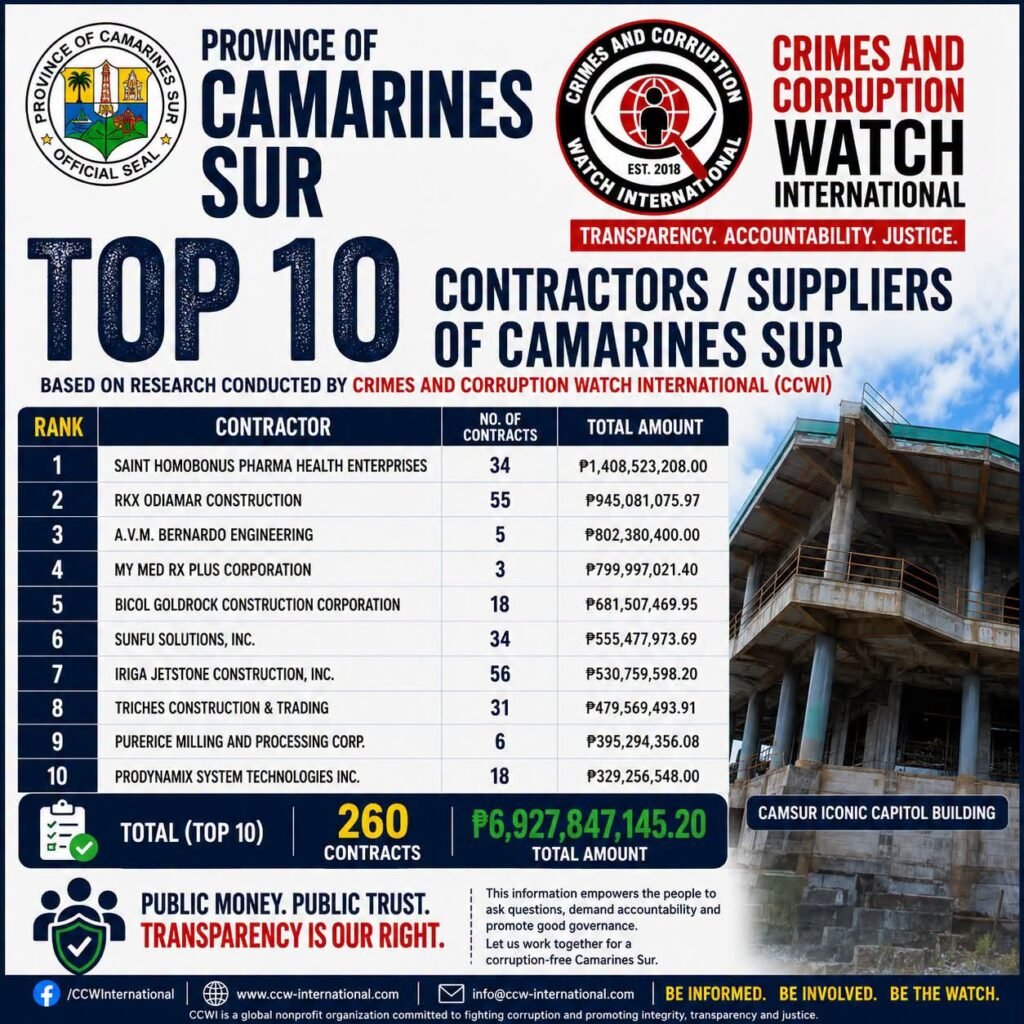
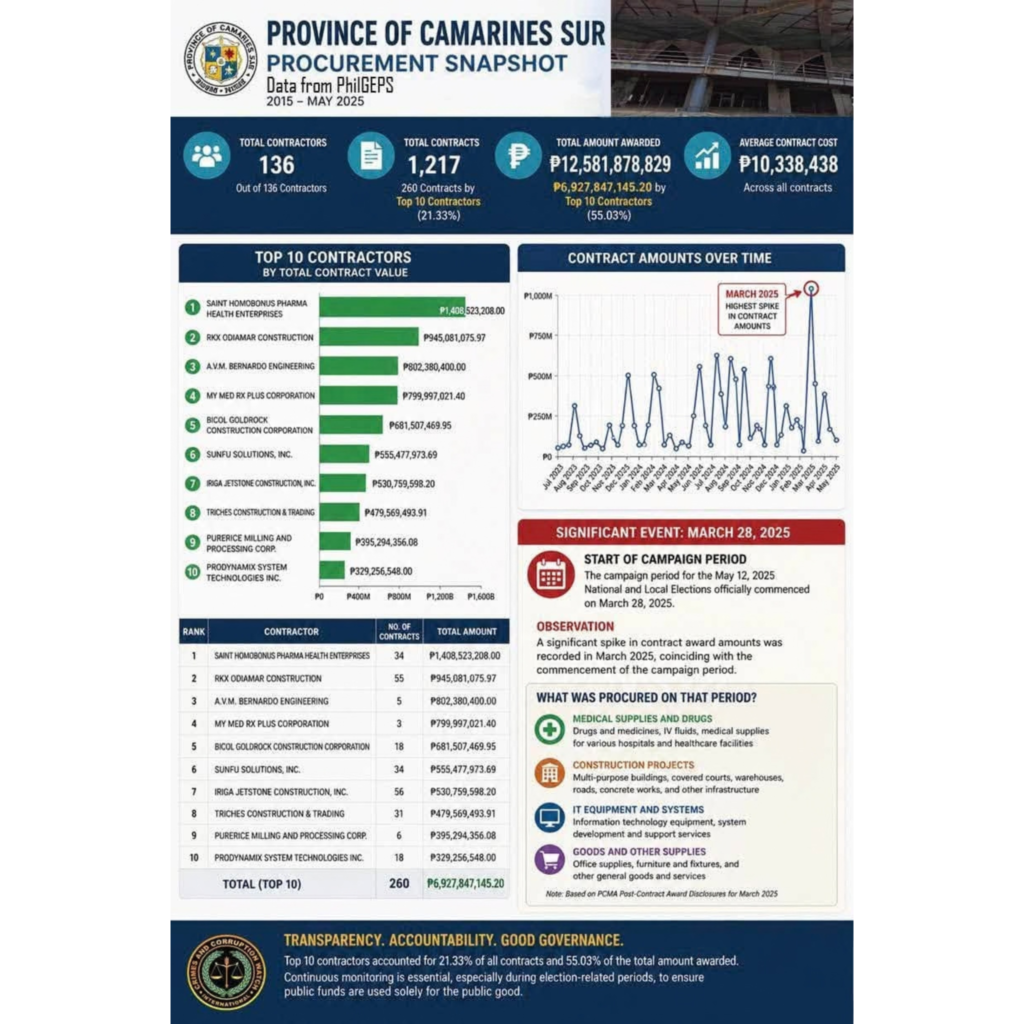
That is the question being raised by Crimes and Corruption Watch International, Inc. (CCWI) after an analysis of publicly available procurement records reportedly showed 1,217 contracts involving the Provincial Government of Camarines Sur, with a combined value of approximately ₱12.58 billion.
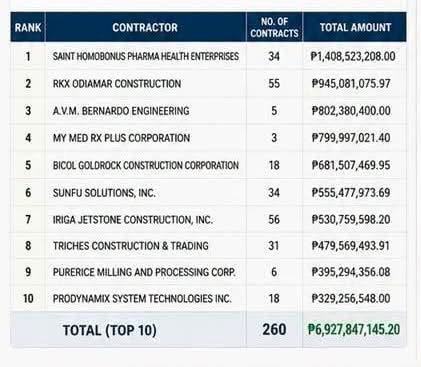
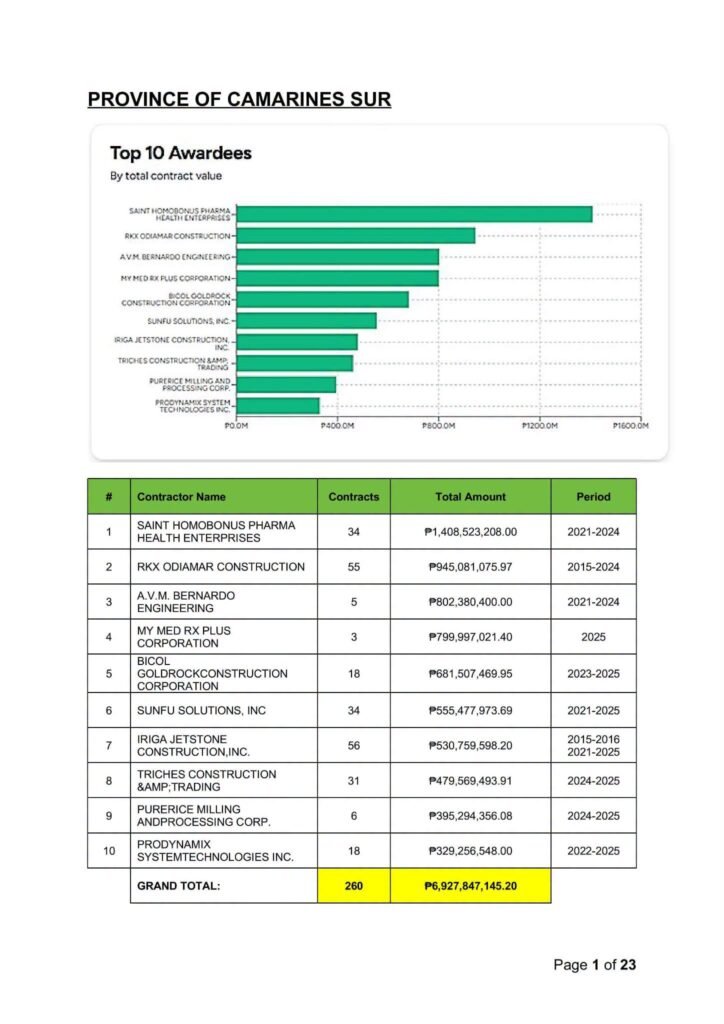
According to the data presented by CCWI, 260 contracts were awarded to the Top 10 contractors, representing approximately 55.03% of the total contract value identified in the dataset.
CCWI said the figures were derived from publicly available Philippine Government Electronic Procurement System (PhilGEPS) records.
₱12.58 BILLION IN CONTRACT AWARDS
The procurement figures presented by CCWI provide a broad picture of the volume and value of contracts recorded under the provincial government.
Based on the organization’s analysis:
| Procurement indicator | Reported figure |
|---|---|
| Total contracts | 1,217 |
| Total contract value | ₱12.58 billion |
| Contracts awarded to Top 10 contractors | 260 |
| Share of total contract value | 55.03% |
The concentration of contract value among the Top 10 contractors is one of the areas CCWI is highlighting for public attention.
The data, however, does not by itself establish whether any procurement irregularity occurred. Contract concentration can have different explanations, including the size, scope, specialization, and number of projects awarded to individual contractors.
MARCH 2025 PROCUREMENT TREND
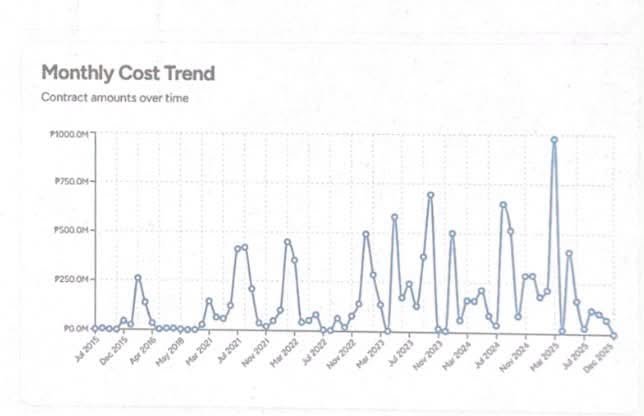
CCWI’s presentation also identifies March 2025 as the month with the highest recorded value of contract awards in the dataset.
The timing has drawn attention because the official campaign period for candidates for provincial, city, municipal, and House of Representatives positions began on March 28, 2025, according to the Commission on Elections (COMELEC). The campaign period ran until May 10, 2025, subject to the applicable campaign prohibitions.
The proximity of the procurement trend to the start of the campaign period is a timeline observation, not proof of a connection between the contracts and election campaigning.
CCWI said the purpose of presenting the timeline is to encourage closer public examination of the underlying procurement records.
WHAT DO THE RECORDS SHOW?
The procurement data raises several questions that can be answered only by examining the individual transactions and supporting documents.
Among the questions that may warrant further review are:
- What were the specific projects covered by the 1,217 contracts?
- How were the contracts distributed among different contractors?
- What were the approved budgets and final awarded amounts?
- What procurement methods were used?
- How many bidders participated in each procurement?
- Were the winning contractors properly qualified?
- Were contracts completed according to schedule and specifications?
- Were there variations, extensions, or additional contracts involving the same projects?
- What percentage of the total procurement value went to the largest contractors?
These questions require examination of the underlying PhilGEPS notices, bidding documents, awards, contracts, procurement records, and project-completion information.
TRANSPARENCY, NOT CONCLUSIONS
CCWI emphasized that its presentation of the data is intended to promote transparency, accountability, and public awareness.
The organization said the infographic and accompanying analysis should not be interpreted as an allegation that the contracts were irregular or that any law was violated.
Rather, CCWI is calling for the public and appropriate oversight institutions to examine the available procurement information and determine whether the transactions complied with applicable procurement rules.
The organization also stressed that the presence of a contract in the dataset, or the fact that several contracts were awarded to the same contractor, does not by itself establish wrongdoing.
THE PUBLIC’S RIGHT TO INFORMATION
Government procurement records provide an important source of information for taxpayers seeking to understand how public resources are being allocated.
For CCWI, making these records accessible and encouraging independent examination of procurement trends are part of the broader effort to strengthen public accountability.
The organization’s analysis therefore leaves an important question for further investigation:
What do the individual procurement records reveal about how the ₱12.58 billion in reported contract awards was planned, awarded, implemented, and accounted for?
CCWI said it will continue monitoring publicly available procurement information and raising questions where additional documentation or clarification may be warranted.
CARLO BATALLA, Ph.D.
Chairman/President
Crimes and Corruption Watch International, Inc. (CCWI)
Source cited by CCWI: publicly available PhilGEPS procurement records. Figures should be independently checked against the underlying PhilGEPS records and official provincial documents before being treated as a complete procurement dataset.
MORE PROCUREMENT DATA TO BE RELEASED
CCWI will soon publish the Top 11–20 contractors and succeeding rankings based on its review of public procurement records, to provide the people of Camarines Sur with greater transparency on government spending.
If the records reveal sufficient evidence of possible procurement violations, CCWI says it may pursue appropriate legal and administrative action against responsible parties, including the Villafuerte and Horibata groups.
The publication is intended to promote transparency, accountability, and public scrutiny.